
For decades, difficulties with listening were too often mistaken for inattentiveness, poor behaviour, or a lack of motivation. Children who repeatedly asked others to repeat themselves and adults who struggled to follow conversations in noisy environments were frequently misunderstood, despite having normal hearing. Today, that narrative is changing. Across Australia, clinicians, researchers, educators, and allied health professionals are reshaping how we recognise, assess, and support Auditory Processing Disorder, offering a more accurate understanding of how the brain interprets sound rather than how the ears detect it.
This evolving perspective is transforming the lives of thousands of Australians who previously lived without answers. Instead of asking whether a person can hear, health professionals are increasingly asking a more meaningful question: How does the brain make sense of what it hears?
Looking Beyond Hearing Tests
Traditional hearing assessments remain essential for identifying hearing loss, but they cannot fully explain every listening difficulty. Someone with healthy hearing sensitivity may still find it exhausting to understand speech in a busy classroom, workplace, or family gathering. This distinction has encouraged Australian specialists to adopt more comprehensive evaluations that examine auditory processing rather than hearing alone.
The growing recognition of APD reflects an important shift in clinical thinking. Instead of focusing exclusively on the ear, healthcare providers are investigating how the central auditory nervous system receives, organises, and interprets sound. This broader approach acknowledges that effective communication depends on both accurate hearing and efficient brain processing.
As a result, many Australians are receiving diagnoses that better explain lifelong listening challenges, replacing years of uncertainty with informed support strategies.
A More Collaborative Model of Care
One of Australia’s greatest strengths in managing Auditory Processing Disorder is its increasingly collaborative healthcare approach. Audiologists frequently work alongside speech pathologists, psychologists, occupational therapists, paediatricians, teachers, and general practitioners to develop a comprehensive understanding of each individual’s needs.
This multidisciplinary perspective recognises that listening influences nearly every aspect of daily life. Difficulties processing speech can affect literacy, classroom participation, workplace communication, emotional wellbeing, and social relationships. Rather than treating these challenges in isolation, Australian professionals are integrating expertise from multiple disciplines to build personalised intervention plans.
The result is a more holistic model that acknowledges both neurological processing and real-world communication.
Technology Is Expanding Clinical Possibilities
Modern diagnostic technologies have significantly enhanced the assessment of APD. Sophisticated auditory testing now allows clinicians to evaluate how individuals process speech in background noise, distinguish subtle differences between sounds, and interpret rapidly changing auditory information.
Digital innovations have also improved intervention options. Remote microphone systems, classroom sound-field technology, auditory training software, and personalised listening strategies are helping Australians participate more confidently in education and professional environments.
Importantly, technology is no longer viewed as a substitute for therapy but as one component within a broader evidence-informed management plan. Australian health professionals increasingly combine technological support with targeted listening exercises, communication coaching, and environmental modifications that improve everyday listening success.
The Classroom Is Becoming More Listening-Friendly
Australian educators are also playing an increasingly important role in recognising Auditory Processing Disorder. Schools are becoming more aware that academic performance may be influenced by listening challenges that are invisible during routine hearing screenings.
Teachers who understand auditory processing are better equipped to adjust classroom communication by reducing unnecessary background noise, presenting instructions in multiple formats, allowing additional processing time, and confirming understanding before moving to new concepts.
These relatively simple adjustments can produce significant improvements in student confidence and classroom participation. Rather than viewing listening difficulties as behavioural concerns, schools are beginning to recognise them as neurological differences that deserve appropriate educational support.
Earlier Recognition Creates Better Outcomes
Awareness campaigns and continuing professional education are encouraging earlier recognition of APD across Australia. Parents, teachers, and healthcare providers are becoming more familiar with common signs, including difficulty following spoken instructions, misunderstanding similar-sounding words, struggling in noisy environments, or appearing to hear but not understand.
Earlier identification allows interventions to begin before secondary challenges emerge. Without appropriate support, persistent listening difficulties may gradually influence literacy development, academic achievement, self-esteem, and emotional wellbeing. Timely assessment provides opportunities to strengthen communication skills while reducing unnecessary frustration.
This emphasis on prevention represents an important evolution in Australian healthcare, where proactive support increasingly replaces reactive management.
Research Is Challenging Long-Held Assumptions
Australian researchers continue contributing valuable evidence that deepens our understanding of auditory neuroscience. Rather than viewing listening as a simple mechanical process, contemporary research highlights the remarkable complexity involved in transforming sound into meaningful language.
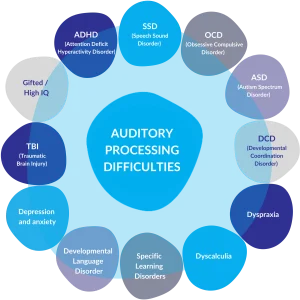
Attention, memory, language processing, cognitive flexibility, and environmental factors all interact during everyday listening. This growing body of knowledge reminds clinicians that Auditory Processing Disorder rarely exists in isolation. Each individual presents a unique profile that requires personalised assessment rather than one-size-fits-all assumptions.
The increasing emphasis on evidence-based practice ensures that interventions continue evolving alongside scientific discoveries, allowing Australians to benefit from increasingly refined diagnostic methods and treatment strategies.
Changing Perceptions, Changing Lives
Perhaps the most meaningful transformation extends beyond clinics and research laboratories. Australian health professionals are helping society replace misunderstanding with empathy. People living with APD are increasingly recognised not as poor listeners but as individuals whose brains process auditory information differently.
This shift changes conversations within families, classrooms, workplaces, and communities. It encourages practical accommodations instead of misplaced judgement and empowers individuals to advocate for the support they need.
Understanding Auditory Processing Disorder is no longer simply about diagnosing a condition. It reflects a broader appreciation of neurological diversity and the many ways people experience communication. As Australian healthcare continues embracing interdisciplinary collaboration, technological innovation, and evidence-based practice, the future promises more accurate diagnoses, more personalised interventions, and greater opportunities for individuals with APD to participate confidently in every aspect of life.
Ultimately, Australia’s evolving approach demonstrates that listening is far more than hearing—it is an intricate partnership between sound, the brain, and human connection. As that understanding continues to deepen, so too does the potential to improve communication, learning, and quality of life for countless Australians.