
Australia has long embraced conversations about hearing health, from newborn hearing screening to workplace hearing conservation. Yet a quieter challenge is only now receiving the recognition it deserves: Auditory Processing Disorder (APD). Unlike hearing loss, Auditory Processing Disorder is not primarily about the ears failing to detect sound. Instead, it concerns the brain’s ability to organise, interpret, and make sense of the sounds that the ears receive. This subtle distinction has profound consequences for education, healthcare, workplaces, and family life across Australia.
As awareness of neurodevelopmental conditions grows, APD is emerging as an essential part of Australia’s broader conversation about cognitive health and communication. It reflects a shift in modern healthcare—from asking whether people can hear sounds to understanding whether they can meaningfully process them.
For decades, many Australians experiencing listening difficulties found themselves caught in a confusing gap. Hearing tests often revealed normal hearing sensitivity, yet everyday conversations remained exhausting. Classrooms felt overwhelming, busy cafés became impossible environments, and following verbal instructions required far greater mental effort than others realised. These experiences were frequently misunderstood as poor concentration, behavioural problems, anxiety, or simple inattentiveness.
Today, advances in neuroscience and audiology are helping explain why these experiences occur. The human auditory system extends far beyond the ear. Once sound enters the ear, the brain performs extraordinarily complex tasks—separating speech from background noise, recognising patterns, identifying emotional tone, remembering sequences, and assigning meaning within fractions of a second. When this neurological processing becomes inefficient, communication may remain challenging despite perfectly healthy hearing organs.
This understanding is reshaping Australia’s approach to hearing healthcare. Rather than viewing hearing solely through the lens of sound detection, clinicians increasingly recognise listening as a sophisticated neurological function requiring accurate brain processing.
One reason Auditory Processing Disorder is attracting greater national attention lies within Australia’s educational system. Modern classrooms are acoustically demanding environments. Open-plan learning spaces, collaborative group activities, digital learning technologies, and constant background noise create conditions that challenge even typically developing auditory systems.
For students with APD, these environments can transform everyday learning into a continuous exercise in cognitive endurance. Listening to teachers while classmates are speaking, distinguishing similar sounding words, following multi-step verbal instructions, or participating confidently in discussions may require enormous mental energy.
Importantly, intelligence is not the issue. Many children with Auditory Processing Disorder possess average or above-average intellectual abilities. Their challenge lies in converting spoken language into usable information quickly and accurately. Without appropriate recognition, these students risk falling behind academically despite having the capacity to succeed.
Australia’s increasing emphasis on inclusive education has therefore brought greater attention to conditions that influence learning without being immediately visible.
Adults are also becoming part of this conversation. Many individuals who struggled throughout childhood without explanation are now discovering that their lifelong listening difficulties may reflect APD rather than personal shortcomings. This growing awareness has particular relevance in modern Australian workplaces where communication dominates professional success.
Video conferences, open-office layouts, customer service roles, healthcare settings, education, emergency services, and collaborative workplaces all demand rapid auditory processing. Employees may hear every spoken word yet still struggle to filter competing voices, retain verbal information, or interpret complex conversations under pressure. Recognition allows workplaces to consider practical communication strategies rather than misinterpreting listening difficulties as poor performance.
Australia’s ageing population also contributes to growing interest in Auditory Processing Disorder. As people age, some experience changes in central auditory processing even when traditional hearing assessments remain relatively stable. Older adults often describe hearing conversations but struggling to understand speech in restaurants, family gatherings, or crowded public spaces.
This distinction between hearing and understanding has encouraged researchers to investigate how central auditory processing changes across the lifespan. Such research may improve assessment methods, rehabilitation strategies, and quality of life for many Australians.
Technology is accelerating this conversation as well. Modern diagnostic equipment, advanced auditory assessments, digital listening devices, assistive technologies, and telehealth services provide clinicians with increasingly sophisticated tools for evaluating listening performance. Artificial intelligence and machine learning are also beginning to contribute to research exploring how the brain processes speech under complex listening conditions.
These technological developments are not replacing clinical expertise but strengthening it. More precise assessments help healthcare professionals distinguish APD from other conditions that may present with overlapping symptoms, supporting more personalised intervention strategies.
Public understanding is evolving alongside scientific progress. Families, teachers, employers, and healthcare providers increasingly recognise that communication challenges cannot always be explained by hearing loss alone. This broader awareness reduces stigma while encouraging earlier assessment and appropriate support.
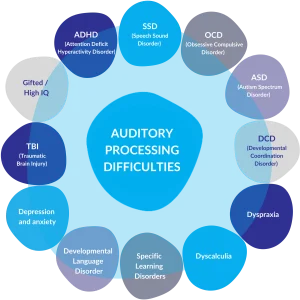
Importantly, awareness does not mean overdiagnosis. Auditory Processing Disorder shares characteristics with several developmental, language, attention, and learning conditions. Comprehensive evaluation by qualified professionals remains essential because successful intervention depends upon accurate diagnosis rather than assumptions based on isolated symptoms.
Australia’s healthcare philosophy increasingly embraces multidisciplinary collaboration, making it particularly well positioned to address complex communication disorders. Audiologists, speech pathologists, psychologists, educators, occupational therapists, paediatricians, and general practitioners each contribute valuable expertise. Together, they build a more complete understanding of how listening difficulties affect daily functioning across home, school, work, and community settings.
Ultimately, the growing conversation surrounding APD reflects a broader transformation in healthcare. Modern medicine increasingly recognises that invisible neurological differences deserve the same attention as visible physical conditions. Listening is not simply an automatic function but one of the brain’s most sophisticated cognitive achievements.
As Australia continues investing in inclusive education, accessible healthcare, and evidence-based neuroscience, Auditory Processing Disorder is becoming more than a specialised clinical topic. It represents a wider commitment to understanding the diverse ways people experience communication. By recognising that hearing well and understanding well are not always the same, Australia is helping create communities where every individual has a greater opportunity to participate, learn, work, and connect with confidence.